


Design ideas & tips
Six decisions that decide how a kitchen ages.
- Covers
- Doors, finishes, storage, light, hardware
- Applies to
- Kitchens, baths, closets, built-ins
- Consultation
- Free, in your home
Read it in order, or jump to the argument you’re having.
None of this is a sales pitch. It is the set of questions we work through on a first visit, and the answers we give most often — including the ones that talk people out of spending money.
- 01Choosing a door style that still looks right in fifteen years
- 02Painted, stained or veneer — how each one ages
- 03Planning storage around how you actually cook
- 04Lighting cabinetry, and why colour temperature matters
- 05What a good hinge and runner actually buys you
- 06Reveals and proportion — what separates custom from stock
Choose the door for the house, not for the season.
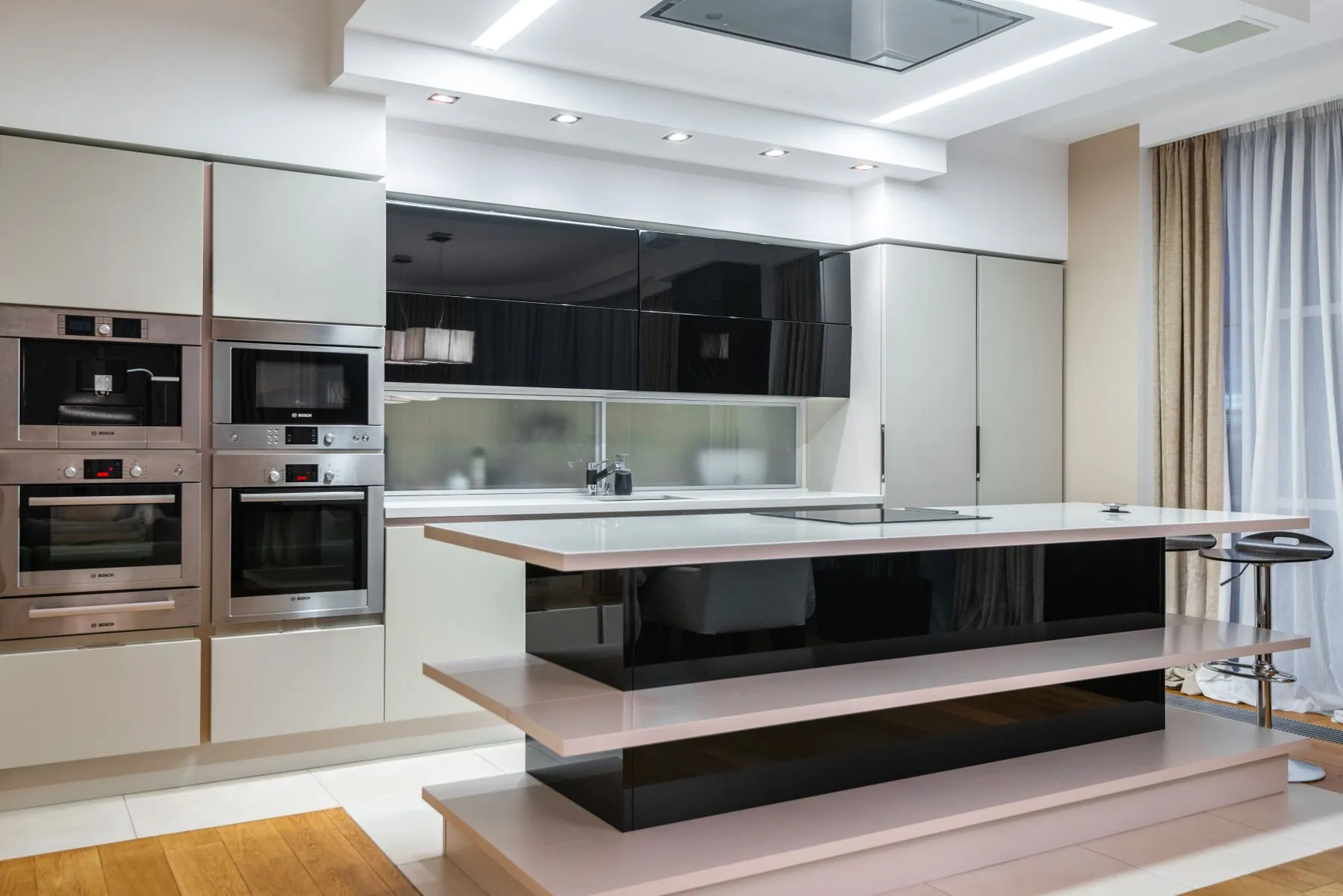
Doors and drawer fronts are roughly ninety per cent of what anyone sees. Everything we argue about behind them — box construction, runners, hinges — matters enormously and is invisible. So the door is the decision worth slowing down on, and the useful question is not which one you like most today. It is which one you will stop noticing.
Start with what the house already tells you. Look at the interior door casing, the baseboard, the stair newel, the window trim. A plain slab carries no period signal at all, which is exactly why it ages slowly — it borrows its character from the wood or the lacquer instead of announcing a style, and it sits as easily beside 1920s Hamilton trim as it does in a 2015 open-plan build. A framed painted door commits to a period instead, and in the wrong house it reads as costume.
What dates a door is applied decoration: layered mouldings, arched top rails, cathedral panels, rope detail, deep bevels around the panel. Each of those was fashionable for about a decade. Flat panels, square edges and honest proportions have outlived every one of them. If you want warmth rather than plainness, take it from material and light — a rift-cut oak, an off-white with a little green in it, unlacquered brass that will patina — rather than from a busier profile.
- Stile width
- A 57 mm (2 1/4 in) stile reads traditional. Around 45 mm reads quieter and more current.
- Panel
- Flat or recessed. A raised or cathedral panel is the first element to look dated.
- Edge
- Square, or a 1 mm eased edge you feel rather than see. Leave the decorative bevel alone.
- Overlay
- Full overlay hides the frame and forgives seasonal movement. Inset shows the frame — and every millimetre of the fitting.
- Mixing styles
- One door profile per home reads calm. If you want contrast between the island and the perimeter, change the colour or the wood, not the profile.
Every finish ages. They simply age differently.
Painted, stained and veneered cabinetry cost broadly similar money on day one. The difference arrives in year seven, when something gets knocked, and again in year twelve, when you want to change part of the room without redoing all of it.
Painted cabinetry is a pigmented catalyzed finish sprayed over a substrate — MDF for the panels, almost always, because a solid wood panel moves with the seasons and eventually telegraphs a hairline where the panel meets the rail. That hairline is the most common complaint about painted wood doors anywhere, and it is not a defect; it is a material behaving as material does. Paint is opaque, so it shows a knock the way a car door does. It is also the only one of the three a good finisher can repair on site: fill, sand, spray, blend the sheen. Very pale whites warm a shade over many years in strong south light.
Stain hides life. Grain and tone break up the surface, so a scuff on a stained white oak drawer front reads as wear rather than damage, and a touch-up marker with a tinted wax handles most of it in ten minutes. The trade-off is variation: two boards from two trees never take stain identically, and a stained kitchen will always show some range across a run. Veneer solves a different problem — a real wood face on a stable core gives wide slab doors that stay flat and grain that can be sequenced along an entire wall, which solid timber cannot do at that width. The catch is thickness. You cannot sand a veneer face on site, so deep damage means replacing the part rather than repairing it.
Painted
Best where the cabinetry should read as architecture, or where it has to match existing trim. Watch the top edges of drawer fronts beside the dishwasher, and expect a fine line at panel joints on solid-wood doors after the first dry winter.
Stained
Best where there are children, dogs and real traffic. Damage disappears into grain and touch-ups are quick and cheap. Accept the natural range of colour across a run — that is the material, not the workmanship.
Veneer
Best for wide slab doors, matched grain and full-height runs. Flat, stable, calm. Treat the face as unrepairable and specify a thicker edgeband wherever hands land.
Cost to repair
Cheapest to hide is stain. Painted sits in the middle — a spot repair is possible and matching the sheen is the skill. Veneer is the dearest, because the fix is usually a new part rather than a repair.
Plan the storage around the way you actually cook.
Catalogues organise storage by object — a spice pull-out here, a tray divider there, an accessory for everything. Kitchens that work organise it by sequence instead: what you touch while unloading the dishwasher, what you reach for in the first three minutes of cooking, and what you need twice a year.
The unload is the most repeated task in the room and the one nobody designs for. Everyday plates and bowls belong in a deep drawer within a step of the dishwasher, not in a wall cabinet on the far side of the island. Do that one thing and the room feels better on a Tuesday night than a far more expensive kitchen that put the dishes where they looked good on the plan.
Below the counter, drawers beat doors for nearly everything. A 900 mm base cabinet with a door asks you to kneel and reach into the dark; the same cabinet in drawers brings the back of it out to meet you. Keep doors for the sink cabinet and for tall awkward things — stock pots, the food processor, the salad spinner nobody can stack. And measure what you own before the drawing is fixed: a sheet pan is about 46 cm, a dinner plate about 27, a stand mixer wants 430 mm of clear height. Cabinets sized to your objects rather than to round numbers routinely recover a full cabinet of space across an average run.
- Everyday dishes
- Deep drawer, within one step of the open dishwasher door.
- Sheet pans, boards
- Vertical dividers beside the oven rather than stacked flat in a base cabinet.
- Spices
- A shallow drawer near the range with labels facing up. Easier to read than any tall pull-out.
- Waste, recycling
- A two-bin pull-out at the prep sink where the peeling happens, not by the door.
- Blind corner
- A good pull-out mechanism earns its cost. A turntable loses the wedge. Ending the run in a panel is sometimes the honest answer.
- Tall storage
- One full-height pantry with adjustable shelves beats three half-depth cabinets you cannot see into.
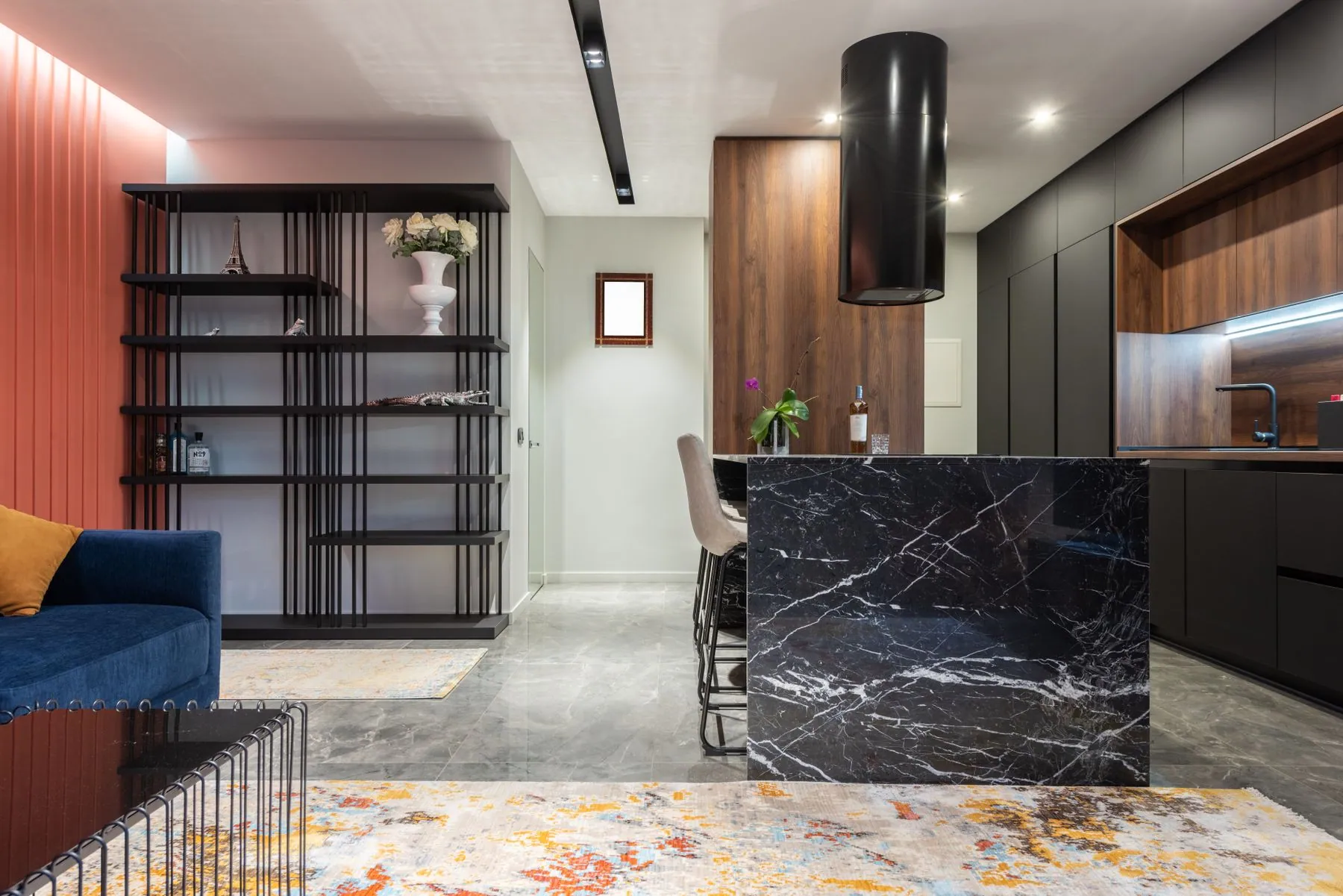
Light the counter, not the backsplash.
Under-cabinet lighting is the upgrade nobody regrets and the one most often installed backwards. Fixed at the back of the cabinet bottom it lights the backsplash beautifully and leaves your hands working in your own shadow. Fixed at the front edge, behind a small shadow rail, it lights the work surface — which was the point.
Use continuous LED tape in an aluminium channel with a frosted diffuser rather than pucks. Pucks scallop the counter into bright pools and dim gaps, and the scallops are permanent. The channel also sinks heat, which is most of what decides whether a strip still matches its neighbours in eight years. Everything should dim, and the dimmer has to be specified alongside the driver — mismatch them and the run flickers at the bottom of its range, which is precisely where you will want it in the evening.
Colour temperature is where good kitchens go wrong. Warm 2700K suits painted and stained cabinetry and makes wood look like wood. 3000K is safer where the counters are white quartz or pale marble and the cabinets are cool grey. 4000K belongs in a garage: it turns warm whites yellow and makes food look grey. More important than the number is that everything in the room shares it — a 3000K strip under a 2700K pendant reads instantly as a mistake, even to people who could not say what is wrong. Specify colour rendering as well: CRI 90 minimum, 95 where food is prepped, or a walnut door goes muddy and a red pepper goes brown.
- Under-cabinet
- LED tape in an aluminium channel with a frosted lens, at the front edge behind a shadow rail.
- Colour temperature
- 2700K in warm rooms, 3000K alongside cool stone. One temperature everywhere in the room.
- Colour rendering
- CRI 90 as a minimum, 95 where you prep. It is what makes wood and food look right.
- In-cabinet
- Vertical strips at the front corners of glass uppers and deep pantries, washing down over the shelf contents. Door switch or motion sensor.
- Toe kick
- Low output on its own switch. After eleven at night it is the only light anyone wants.
- Control
- A dimmable driver matched to the dimmer, chosen together at specification rather than on install day.
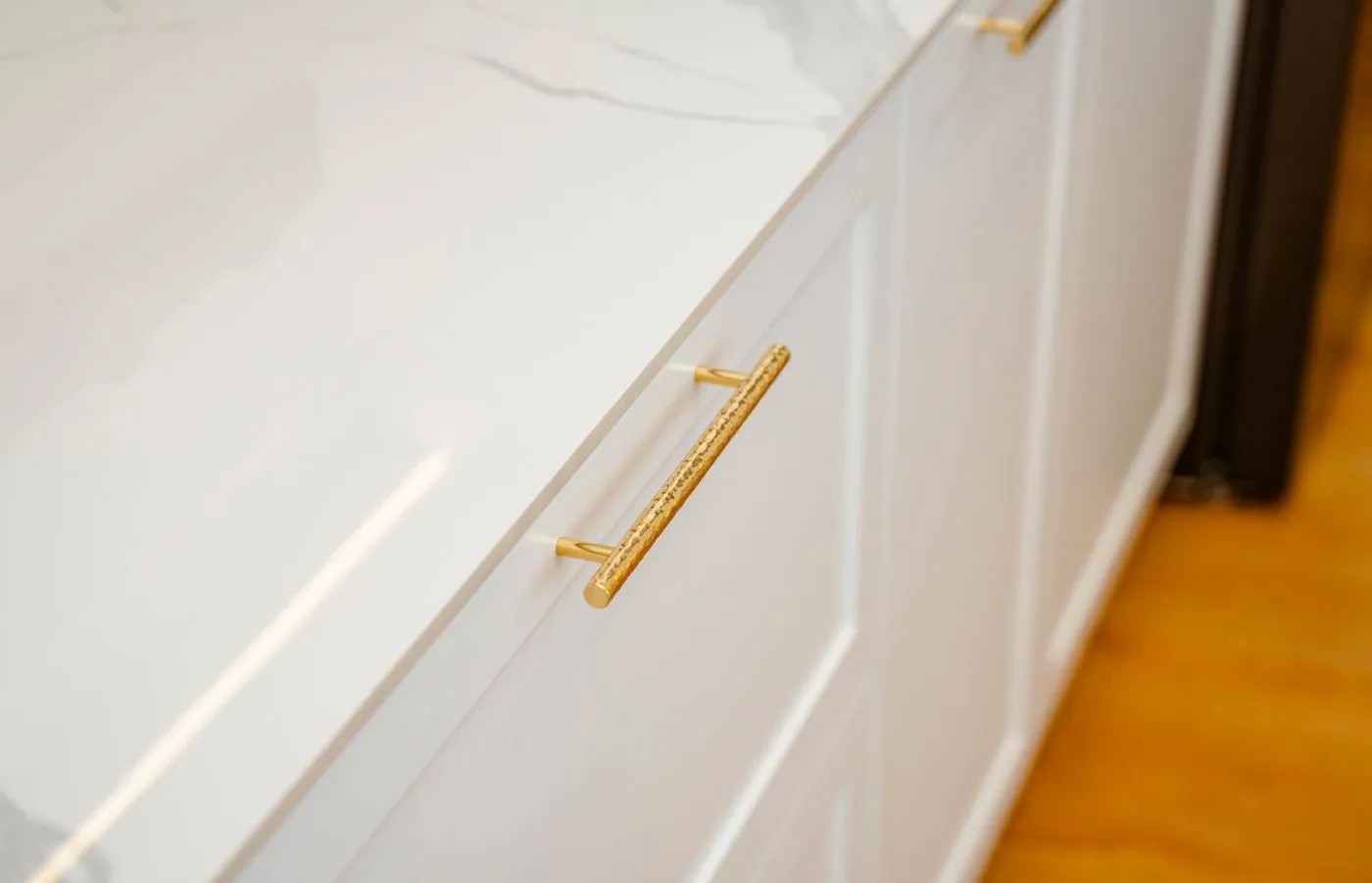
The only moving parts in the room.
A kitchen has perhaps sixty moving parts and you operate most of them several times a day without looking at them. Hinges and runners are the whole of that experience. They are also the first place a quote gets quietly cheapened, because nobody standing in a showroom opens a cabinet and asks what brand the hinge is.
A good hinge buys three things. Adjustment: six-way adjustment means height, depth and side can all be brought back into line with a screwdriver years later, after the house has settled and the floor has moved. A two-way hinge leaves a door that has drifted, drifted. Consistency: a full run of doors sitting on one plane is a hinge-quality question as much as an installation one. And soft close integrated into the hinge body rather than added as a clip-on cylinder — the clip-ons are the first component to fall off and the hardest to match later.
Runners are the same argument with more weight on it. Full-extension undermount runners bring the whole drawer clear of the cabinet, so the back 150 mm becomes usable storage instead of somewhere things go to be forgotten; a three-quarter extension gives you a drawer you can only use two thirds of. Ask for the dynamic load rating rather than the static one. Undermount runners also say something about the box, because they only run sweetly if the box is square and the bottom groove is accurate. Cheap runners forgive a sloppy box. Good ones do not. The board matters here too: a runner fixing and a hinge plate both want a screw that holds, which is one of the reasons a birch-ply carcase gets taken to 18 mm under a loaded drawer bank and left at 16 mm where it does not have to be.
Six-way adjustment
Height, depth and side, all with a Phillips screwdriver. It is what lets a door be brought back into line in year nine instead of lived with.
Integrated soft close
Damped inside the hinge body. Clip-on dampers are the first part to fail and the hardest to match once the model has been discontinued.
Full extension, undermount
The whole drawer leaves the cabinet, the runners stay out of sight below the box, and the back of the drawer becomes real storage.
Load rating
Around 30 kg suits cutlery and linens. 40 to 50 kg is what a pot drawer or a full-height pull-out pantry actually needs.
Pulls that fit the hand
Hold the sample and pull it toward you the way you would open a heavy drawer. Solid brass and stainless hold their finish; plated zinc wears through first at the corner of the pull nearest the dishwasher.
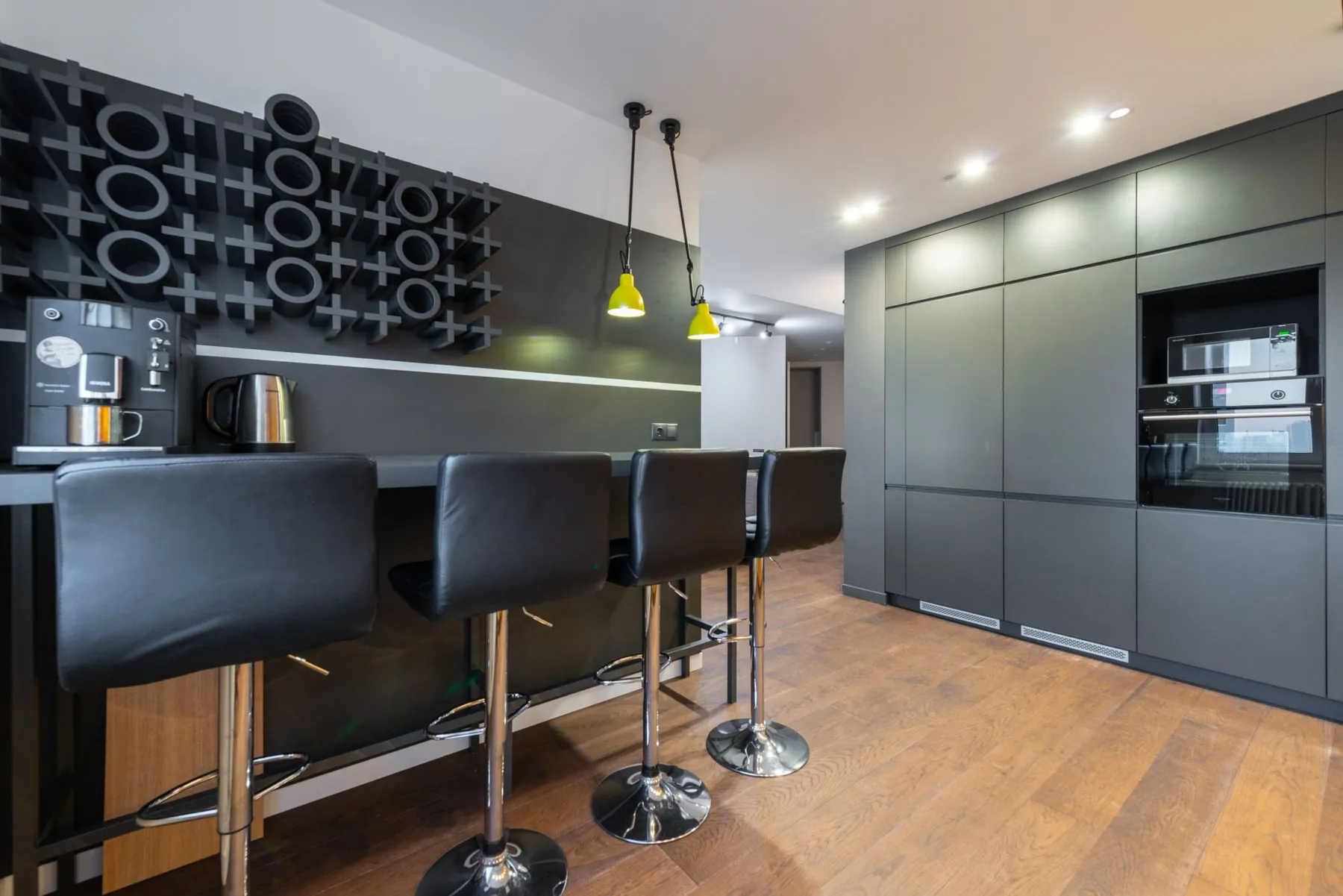
Custom is mostly a question of lines.
The reveal is the gap: between one door and the next, around a drawer front, where cabinetry meets a wall. A few millimetres of nothing, and the clearest single difference between cabinetry made for a room and cabinetry ordered in fixed widths then packed out to fit.
Stock runs come in set increments, so whatever is left over at the wall becomes a filler strip — usually 40 to 90 mm of flat material beside the last door. Once you have seen one you will see it in every kitchen you walk into. Custom cabinetry does not remove the leftover; it distributes it. Widths are adjusted across the run and the end panel is scribed to the wall, so the joint follows the plaster instead of announcing that the plaster is not straight. The same logic applies at the ceiling: either carry the uppers up and scribe them, or stop them deliberately at a height that looks chosen, with a shelf or a light in the gap. What looks careless is a 200 mm dust shelf nobody decided on.
Then hold the reveal. Three millimetres, consistent everywhere, reads as machined; two is tighter and less forgiving of seasonal movement, and on inset doors that gap is essentially the whole job. Consistency matters far more than the number. Lines should also run through — the top of a dishwasher panel level with the drawer front beside it, door edges landing on the counter seam, end panels returning in the same thickness as the doors, the toe kick at one height around the room. And graduate a drawer stack: a shallow top drawer over two progressively deeper ones looks considered, while three equal drawers look like a filing cabinet. Cabinetry almost never disappoints on material. It disappoints when the lines do not line up.
- Reveal
- 3 mm, held everywhere. Consistency reads as precision; the number itself matters less.
- Fillers
- Scribed panels against the wall, never a flat strip beside the last door.
- Drawer stack
- Graduated heights, shallowest at the top. Equal drawers look like office furniture.
- End panels
- Full-depth returns in the door material and thickness, finished on any face visible from the hallway.
- Appliance panels
- In the same plane as the doors, carrying the same reveal, on hinges rated for the weight.
- At the ceiling
- Scribe to it, or stop short on purpose. A leftover gap is the tell.
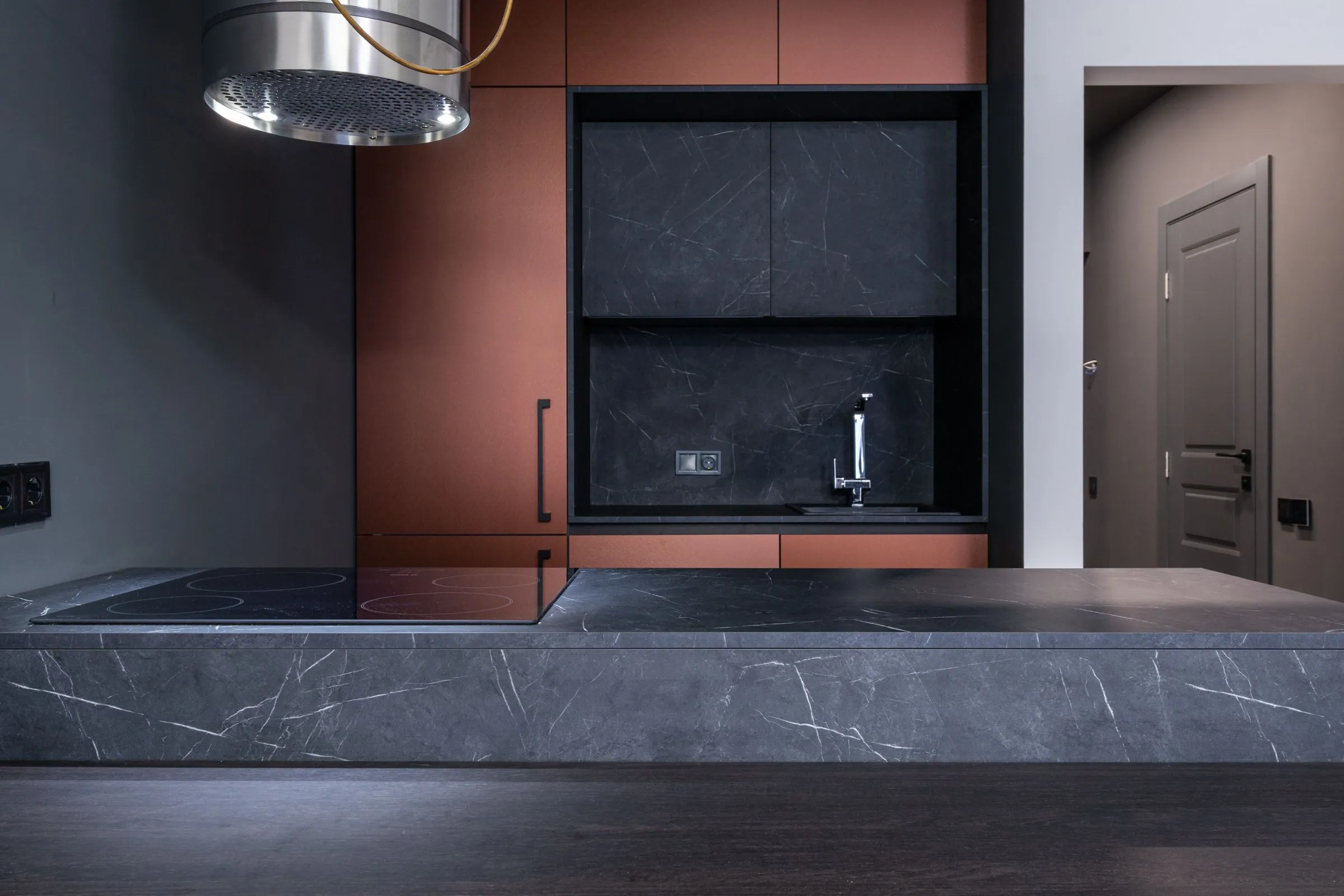
Bring this list to the kitchen table.
Your consultant arrives with door styles, colour and finish samples, hardware you can open and close, and design ideas — then leaves you with a computerized design and a detailed estimate. Free, with no obligation. Disagree with any of the advice above and we will happily argue it through with the samples in front of us.